

Nageswaran Temple, known as ‘Kudanthai Keezhkottam,’ at Kumbakonam in Thanjavur district
| Photo Credit: R. Vengadesh
An overwhelming silence prevails in the inner precincts of the Nageswaran Temple, known as ‘Kudanthai Keezhkottam,’ at Kumbakonam in Thanjavur district. Sung in praise by the Saivite saints, the temple, together with the mandapam designed like a chariot, stands as a testimony to the creative zenith of the early Cholas. For lovers of books and music, however, the temple is inseparable from T. Janakiraman’s Tamil novel ‘Mogamul’ (thorn of desire) and the soul-stirring music of the Hindustani performers from Maharashtra.
Janakiraman seems to have chosen the setting with clear intention. The musicians first appear at the Kumbeshwaran Temple, then at the house of Ranganna, the guru of Babu, the novel’s protagonist, and later give a full-fledged concert at the Nageswaran Temple. The temple’s atmosphere is perfectly suited to their performance. Even today, there is little change in the setting.
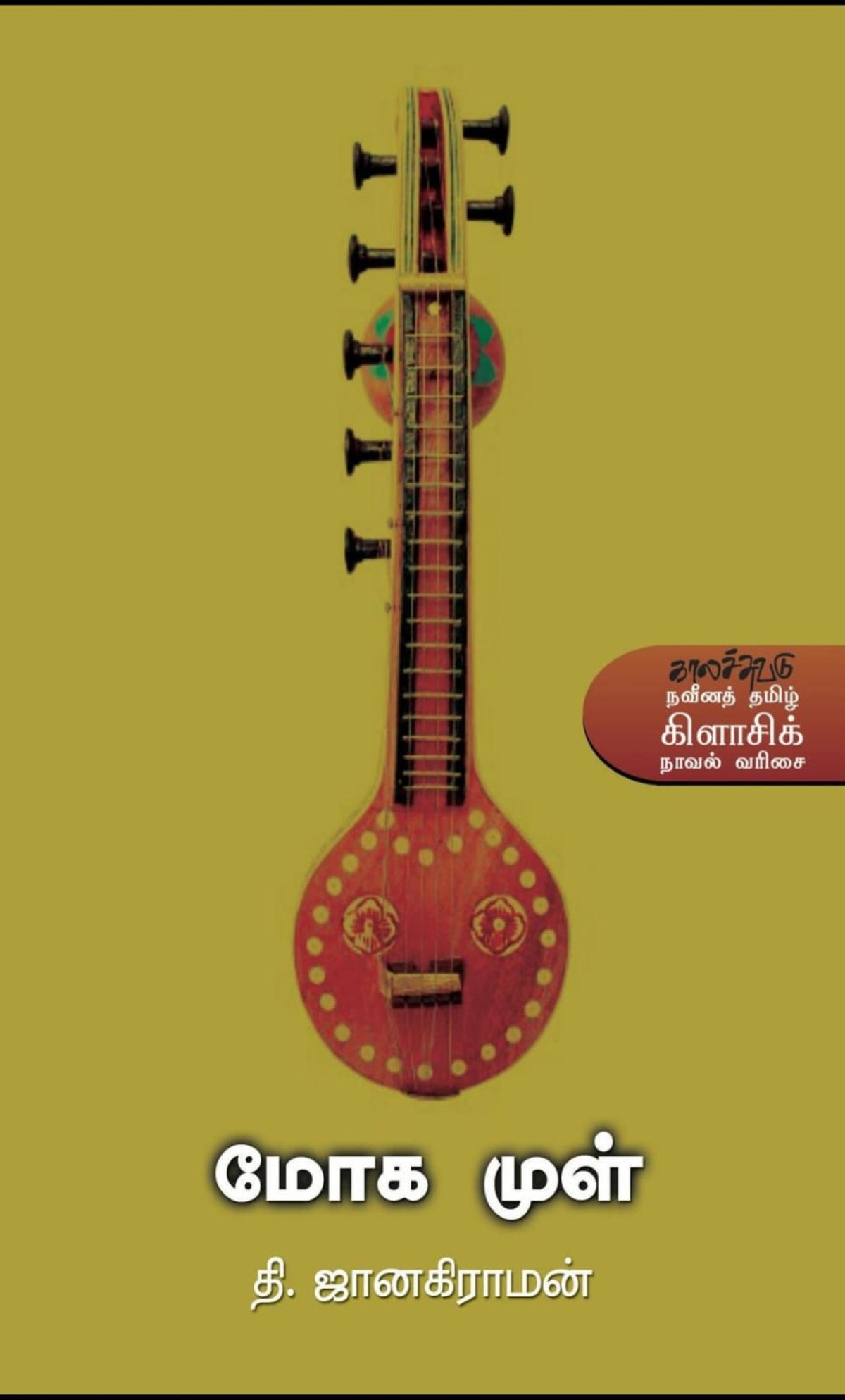
The book cover of T. Janakiraman’s Tamil novel ‘Mogamul’
| Photo Credit:
Special Arrangement
“A commentary on the difference between idealistic Carnatic music and what was prevalent in concert halls underlines the novel throughout. Janakiraman suggests that the soul of the music, embodied by Ranganna, a character modelled on Umayalpuram Swaminatha Iyer, is being lost, and that singers no longer focus on the voice. Conventionally, too, there is an opinion that Carnatic musicians do not pay enough attention to voice culture,” says Lalitharam, historian of Carnatic music.

When Babu first listens to the Hindustani musicians at Ranganna’s house, he marvels at the sheer weight of the voice:
“Can a human voice carry such weight? What strength there is! The effortless control of breath unsettled Babu. How does the entire voice rise to the higher notes? His body trembled as the singer stayed in the mandhra for four minutes, then gradually reached the mel shadjam and sustained the note with long karvais. Goosebumps rose on Babu’s skin, and his eyes filled with tears,” writes Janakiraman. Ranganna, eyes closed, murmurs “aha, aha,” his body swaying like a snake to the tune of a magudi (been instrument).
“In the Kumbeshwaran Temple, devotees mistook them for beggars and tossed a few coins. They deposited all of it in the temple hundi,” Ranganna tells Babu, underscoring that external appearance means nothing in music.
Janakiraman creates yet another scene to drive home his point: the entry of Palur Ramu, a disciple of Ranganna who now resides in Chennai. Draped in a khadi dhoti and panchakacham (dhoti traditionally draped with five pleats), he flaunts his patriotism merely borrowed from politicians and media persons.
The arrogant smile on Balu’s lips fades when the Hindustani musician, at Ranganna’s request, holds the mandra panchamam and then lowers his voice further to the mandra shadjam, revealing the delicate contours of the raga.
When Balu remarks that the Hindustani singers were fortunate, Ranganna makes it clear it was hard work and practice that contributed to the sweetness of their voices.
Later, Babu brings them to the house of Yamuna, the heroine of the novel, as she can converse with them in Marathi and obtain more details about their origin and their music. Subsequently, he arranges a performance in the Nageswaran Temple, which remains empty and resembles a “poor man’s wedding ceremony.”
The sound of the tambura echoes across the granite pillars of the temple. The senior musician aligns himself with the sruthi and begins to sing. Yamuna and her mother Parvathi stand near a pillar. After they finish singing, Babu approaches her.
“My heart aches. How is he able to sing like this? I feel I am going mad,” says Yamuna.
Published – November 30, 2025 04:24 pm IST
Source link


